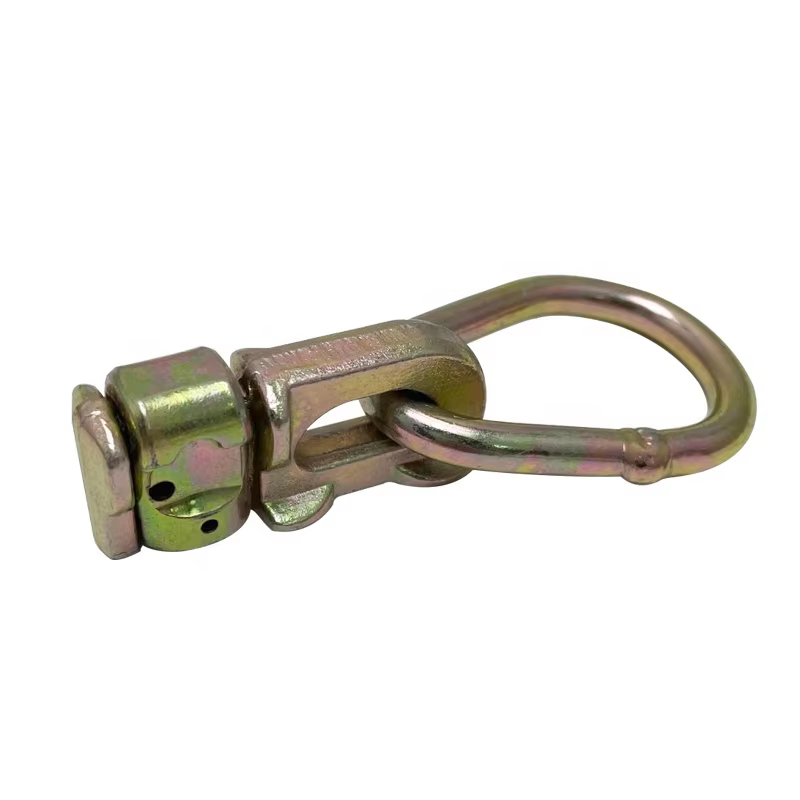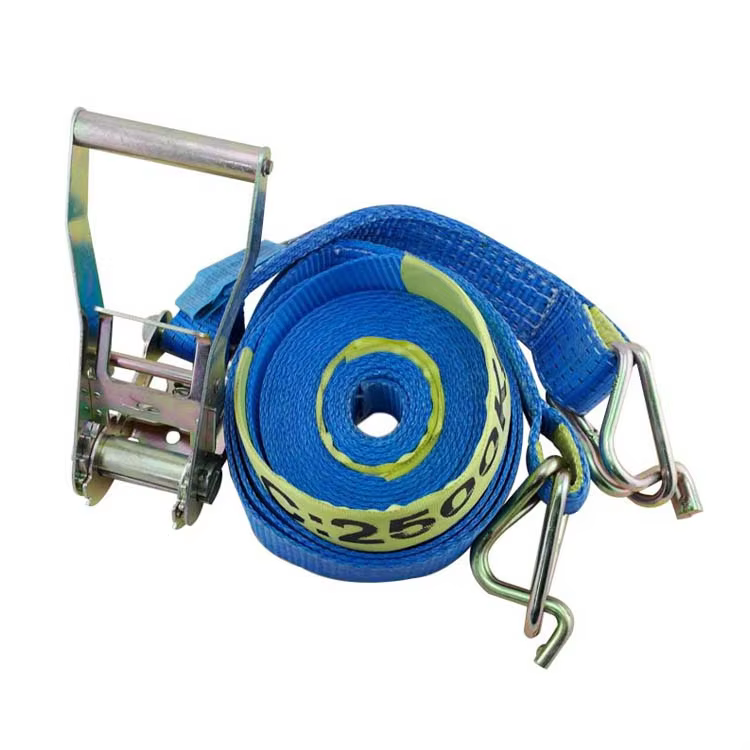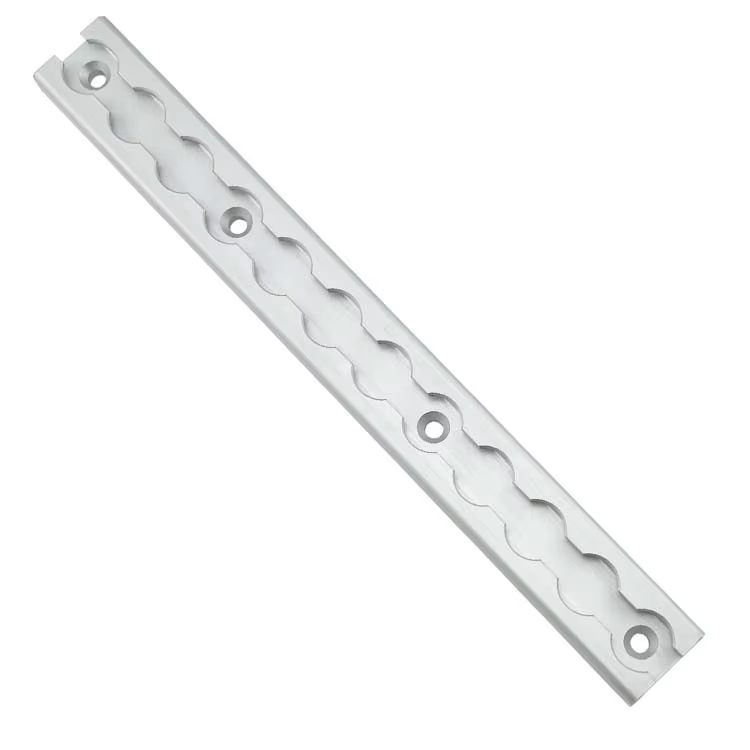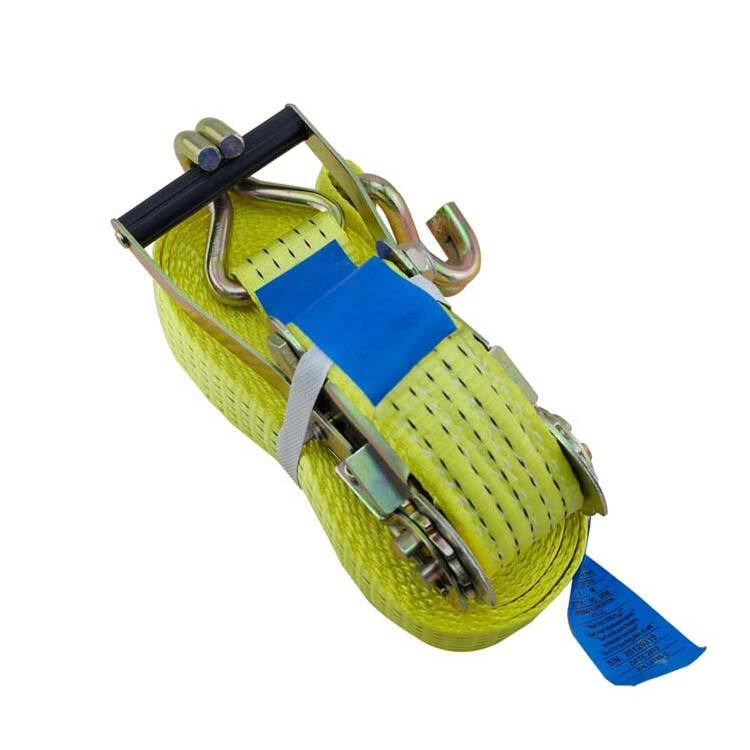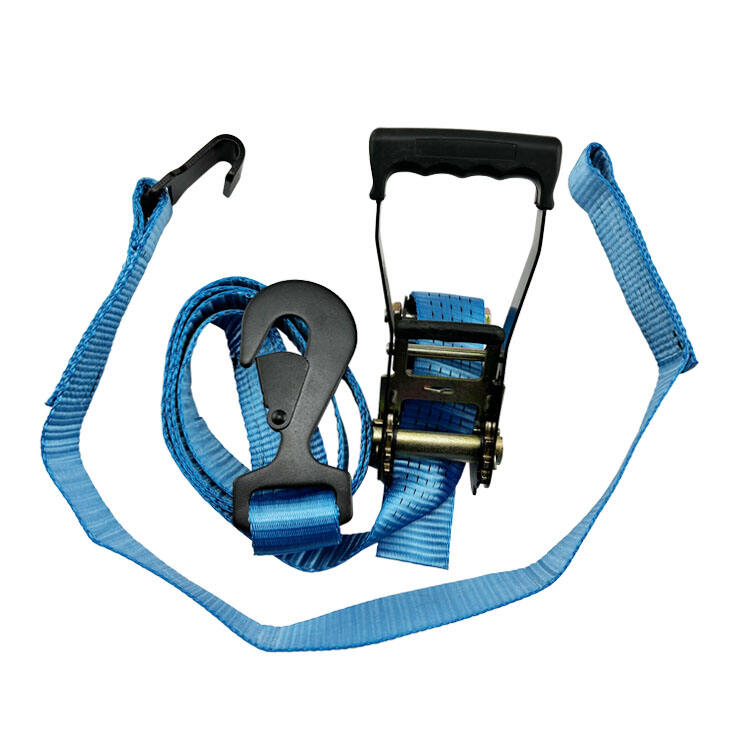
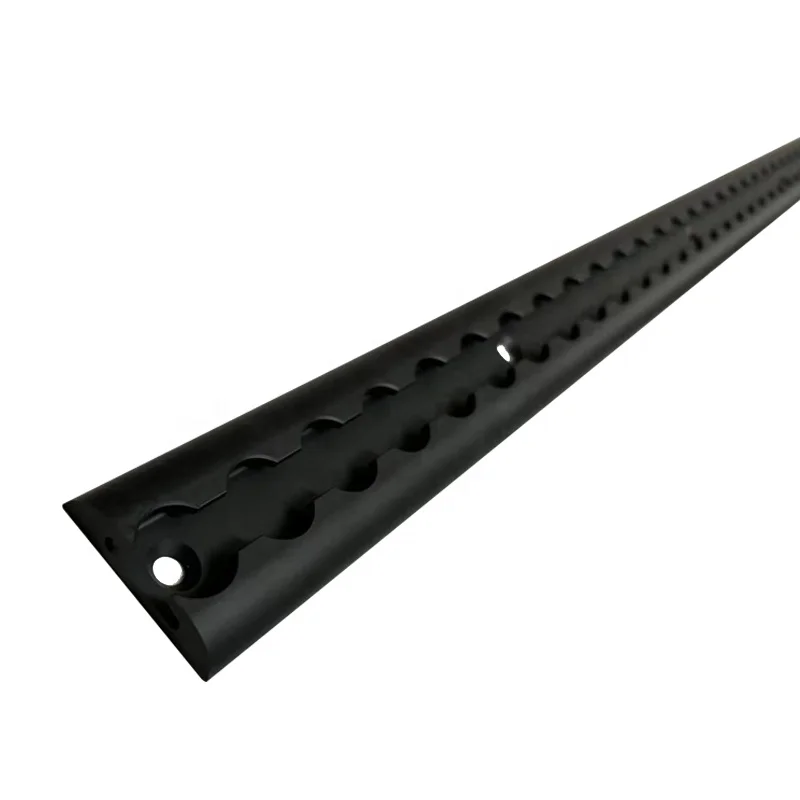
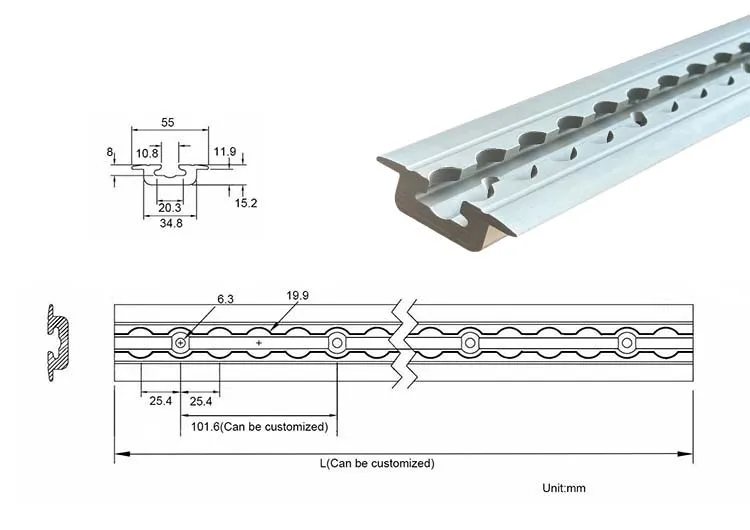
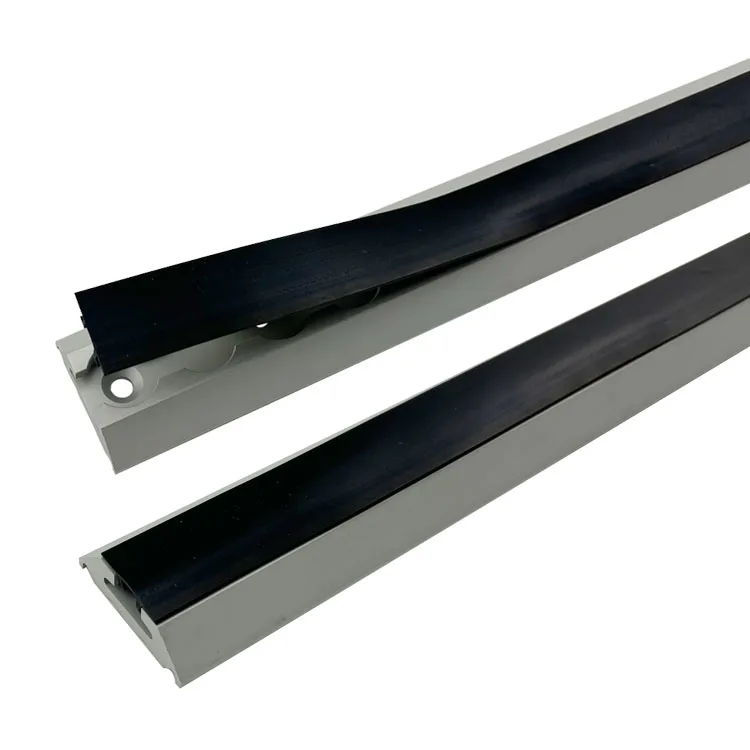
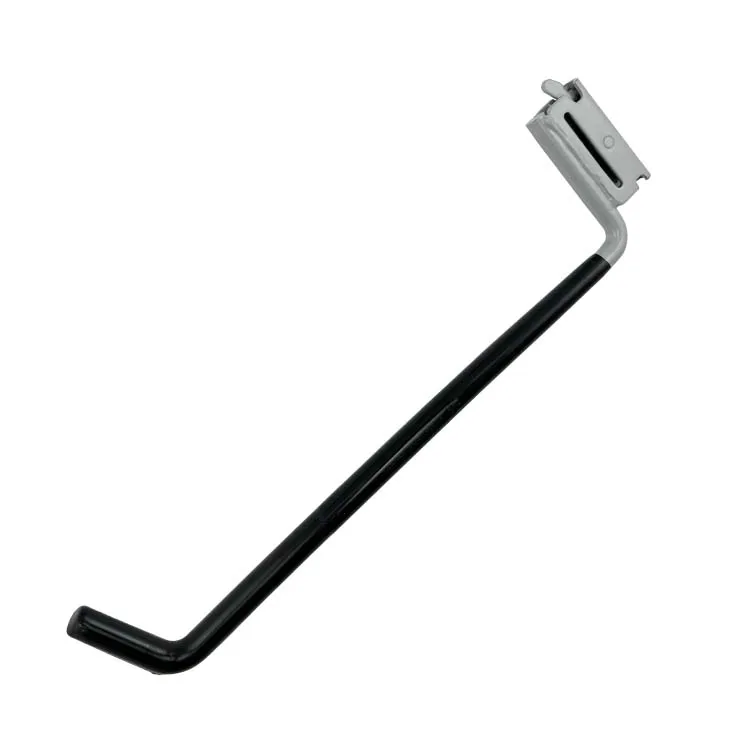
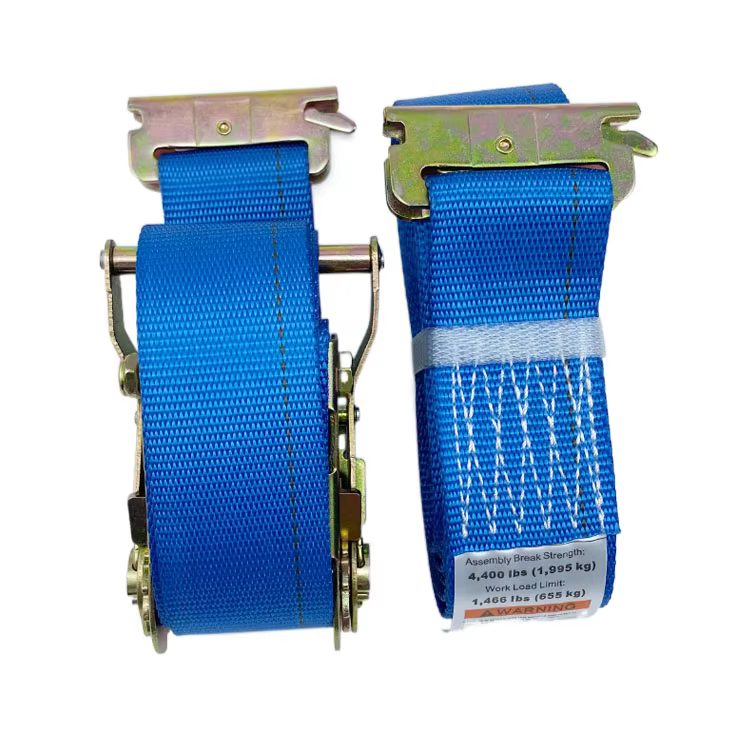
Cargo belts for airline track tie down are engineered to meet the stringent safety and performance requirements of aviation logistics, where space constraints, weight limitations, and fire safety are paramount. Constructed from lightweight yet high-strength aramid or polyester webbing—often treated with flame-retardant chemicals—these belts comply with FAA (Federal Aviation Administration) and EASA (European Union Aviation Safety Agency) standards for in-cabin and cargo hold use. Their breaking strength ranges from 2,000–8,000 pounds, with a focus on high strength-to-weight ratios to minimize added cargo weight. The end fittings are compact, featuring a spring-loaded plunger that locks into airline-specific track systems (such as those found in passenger cabins or freight containers) with minimal clearance, ensuring a secure fit in tight spaces. Adjustment is achieved via a low-profile ratchet or cam buckle made from aluminum alloy, reducing weight while maintaining durability. These belts are designed for rapid deployment, with quick-release levers that allow for emergency cargo removal if needed. Additionally, they resist temperature extremes (-40°F to 180°F) and chemical exposure from aviation fluids, ensuring reliability in the harsh environment of aircraft holds. Whether securing luggage, mail, or small freight, their compatibility with airline track systems—including standardized 1-inch and 2-inch profiles—makes them a staple in commercial and cargo aviation operations.