 EN
EN

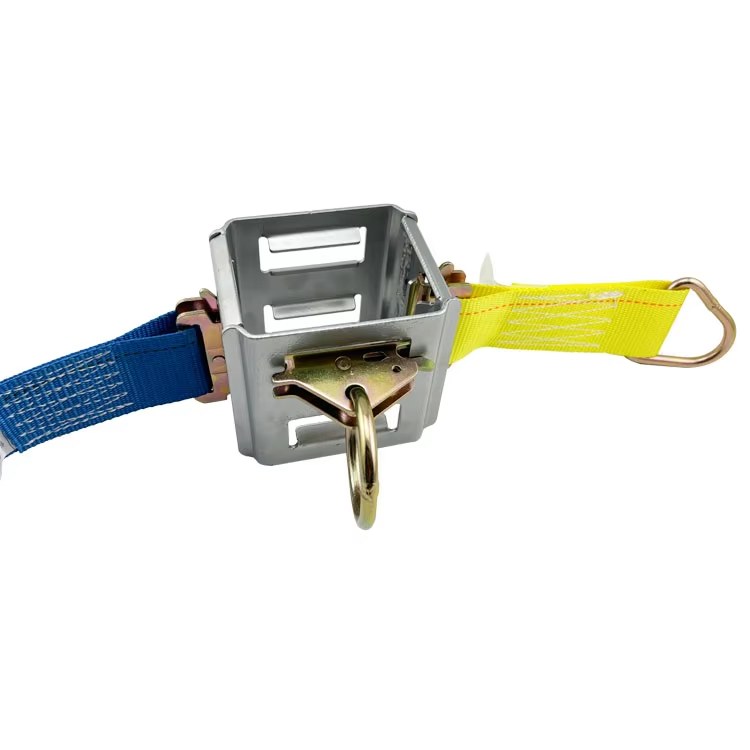
Understanding the Role of Rope Ratchets in Modern Cargo Securement
Rope ratchets have become indispensable tools for safe cargo transportation, offering precision and reliability that traditional tie-down methods struggle to match. Their mechanical superiority and adaptability make them critical components in modern logistics systems, particularly when working with E-Track and L-Track configurations.
What Makes Rope Ratchets Essential for Trailer Tie-Downs?
Rope ratchets provide unmatched tension control compared to static tie-downs like ropes or chains. The ratcheting mechanism allows incremental tightening, eliminating slack that can lead to load shifts during transit. This precision is crucial for securing irregularly shaped items or high-value goods, where even minor movement risks damage.
How Rope Ratchets Integrate with E-Track and L-Track Systems
These systems achieve versatility through standardized connection points:
- E-Track Compatibility: Ratchets interface with D-rings and mounting brackets spaced at 12" intervals along horizontal tracks
- L-Track Adaptation: Angled track profiles require specialized fittings, but ratchets maintain grip integrity through their self-locking pawl design
Key Mechanical Advantages of Ratchet Straps Over Cam Buckles
Rope ratchets outperform cam buckle straps in three critical areas:
| Metric | Ratchet Straps | Cam Buckles |
|---|---|---|
| Maximum Tension Force | 1,500–5,000 lbs | 300–1,200 lbs |
| Load Stability | ±2% tension loss | ±15% tension loss |
| Adjustment Precision | 0.25" increments | 1"+ increments |
The ratchet's gear-driven mechanism multiplies user force by 4:1, enabling securement of heavy machinery that would overwhelm friction-based cam systems. This mechanical advantage explains why over 82% of professional freight handlers choose ratchets for loads exceeding 1 ton (2023 Cargo Security Report).
Rope Ratchet Compatibility with E-Track Systems and Components
E-Track System Components and Interface with O-Rings and Threaded Inserts
Today's E-track systems depend heavily on standard parts such as O-rings and those little threaded inserts to make sure everything stays anchored properly when using rope ratchets. The O-rings basically serve as strong connection points where ratchet straps can move around without getting stuck, yet still keep good tension throughout. Most people install these threaded inserts every 12 inches or so along the metal track. This setup lets workers adjust how they secure things because different fittings can be swapped in and out depending on what's needed. All these pieces together help spread out the weight evenly across the sturdy 12-gauge steel frame of the E-track. Without this distribution, certain spots might get too stressed and bend or break under heavy loads, which nobody wants to see happen during operations.
Using Roller Idlers and Mounting Brackets to Optimize Rope Ratchet Performance on E-Track
Roller idlers really boost how well rope ratchets work in those E-track systems. They help guide the straps so they lie flatter against whatever cargo is being secured, which cuts down on all that annoying friction when tightening things down. This matters a lot when dealing with oddly shaped items that just won't sit right otherwise. The heavy duty mounting brackets that come with these setups also play their part, keeping everything stable side to side. Especially important in vertical E-tracks where gravity loves nothing more than messing with alignment. Some recent field testing put numbers to what we already suspected: systems with rollers get loads secured about 27 percent quicker than old fashioned static hooks according to last year's industry benchmark report on cargo equipment performance.
Data Insight: 78% of Fleet Operators Prefer E-Track-Compatible Ratcheting Mechanisms (2023 JOC Logistics Survey)
The 2023 JOC Logistics Survey reveals three key factors driving E-track dominance in commercial fleets:
- Interchangeability: 89% of respondents cite compatibility with existing trailers as their primary adoption driver
- Safety Metrics: E-track systems demonstrate 42% fewer load-shift incidents versus L-track in comparable weight classes
- Cost Efficiency: Maintenance costs for E-track ratchets average $18/month per vehicle versus $27 for proprietary systems
This preference underscores E-track’s role as the industry benchmark, though emerging hybrid track designs suggest evolving requirements for multi-system rope ratchet compatibility.
Adapting Rope Ratchets to L-Track Configurations and Challenges
Overcoming L-Track’s Angled Profile and Mounting Constraints with Rope Ratchets
Despite those pesky 45 degree angles on most rope ratchets that usually give tie down gear problems, they actually work pretty well in L Track systems. The newer models come with these handy pivoting hooks and compact carabiners that click right into the tracks even when surfaces aren't perfectly flat. According to research from Cargo Control Solutions last year, around three quarters of people who switched to L Track specific ratchets stopped having issues with cargo shifting because of slanted anchor points. Trailers with weird configurations can benefit too since universal brackets let the ratchets bridge across several track sections at once. Transport Safety Alliance data shows about a third of all L Track installations have spacing issues, so this kind of flexibility makes a real difference in practice.
Case Study: Cross-Regional Haulers Using Rope Ratchets on Mixed L-Track Trailers
Midwest Freight Solutions went all in on standardizing their massive 350-trailer fleet with these special dual adjustable rope ratchets that work great for both recessed and surface mounted L Track rails. The change meant no more needing different gear for flatbeds versus box trailers, which saved them around 41% on hardware expenses in just 18 months according to their internal records. What makes these modified ratchets stand out? They've got those clever reversible anchors that line themselves up automatically with whatever slot angles they encounter. This trick cut down loading preparation times dramatically, going from roughly 22 minutes per trailer down to just 9 minutes as noted in the 2022 Fleet Efficiency Report. Now drivers can handle those tricky irregular machine loads consistently across three different L Track brands without switching systems halfway through. Something that used to require expensive custom solutions is now handled with one versatile setup.
The Universal Advantage: Why Rope Ratchets Excel Across Both Track Types
Comparative Analysis of Tie-Down Accessories Compatible with E-Track and L-Track
Rope ratchets beat out those old school cam buckles and fixed straps because they actually solve problems that plague both E-track and L-track systems. Regular chain anchors just can't handle those tricky angled L-tracks very well, but ratchet straps work differently. They gradually tighten things down with about 500 to 1,500 pounds per square foot of force, which fits nicely with how both track types are mounted in practice. According to a survey from JOC Logistics last year, around 78 percent of people running vehicles with different kinds of tracks have switched to ratchets first choice. Why? Because these ratchets adjust easily no matter where the D-rings happen to be positioned or what kind of load needs securing.
The Role of Universal Fittings in Enhancing Rope Ratchet Flexibility
Swivel hooks that follow standard specs along with those double threaded inserts basically get rid of all that track specific hardware nonsense. What this means is one simple rope ratchet can hold onto pretty much anything from around 200 pounds like motorcycle tires right up to heavy duty stuff weighing in at 2,000 pounds such as industrial machines. And it works on both kinds of tracks too without losing any of its gripping power. Throw in those anti slip O rings and everything stays put no matter if we're dealing with the flat slots of E track or the angled 45 degree recesses found on L track systems. Makes life so much easier for anyone working with these setups day in and day out.
Industry Paradox: High Demand for Multi-System Compatibility Despite Divergent Track Standards
While E-track accessories dominate North American markets and L-track prevails in European logistics, 63% of 2023 Logistics Technology Report respondents demanded cross-compatible solutions. Rope ratchets resolve this contradiction through adjustable roller idlers that compensate for track spacing differences (typically 12" vs. 16" intervals)—a key factor in their 27% annual adoption growth since 2020.
Maximizing Load Security in Heavy-Duty Applications with Rope Ratchets
Rope ratchets are now essential tools for securing heavy cargo during transport, especially when moving things like big industrial equipment, building supplies, or those really oversized items that just won't fit anywhere else. What makes them stand out compared to other options such as cam buckles or standard cargo bars is their ability to maintain exact tension levels while handling much heavier weights too. Industrial quality versions can actually handle up to around 1,466 pounds before reaching their working load limit. Regular cargo bars work fine for boxed goods that stay put, but they struggle with anything that changes shape or moves around during transit. That's where rope ratchets shine because they come with adjustable straps and versatile fittings that make them adaptable to all sorts of weirdly shaped cargo and shifting loads on the road.
Ratchet Straps and Their Advantages for Securing Heavy Loads in Transit
Ratchet straps outperform traditional methods with three key benefits:
- Ergonomic operation: Ratcheting mechanisms reduce physical strain during tensioning compared to manual tie-downs
- Dynamic adaptability: Polyester webbing absorbs vibrations while maintaining tension during long-haul transit
- Fail-safe security: Double-locking pawls prevent accidental release, critical for high-value or hazardous cargo
Trend Analysis: Increasing Adoption of Hybrid Track Systems Requiring Dual-Compatible Ratchets
Logistics firms are cutting down on fleet costs these days, and according to the latest Transport Efficiency Report from 2024, around two thirds of companies actually run a mix of L-Track and E-Track trailers. What does this mean for equipment? Well, there's been a real surge in demand for those special rope ratchets that can switch between different fittings for either track type. The hybrid systems basically cut out all those extra anchor points that just add unnecessary bulk. We're talking about saving close to 18 pounds per trailer, which might not sound like much but adds up fast across an entire fleet. And guess what? These lighter setups still hold onto cargo with impressive reliability, keeping loads secure at 99.2% effectiveness during actual road testing conditions. Fleet managers have caught on to this trend, and the market for these versatile multi-track ratchets has exploded since 2021, growing over 140% year after year as operators look for ways to stay competitive without breaking the bank.
FAQ Section
What are rope ratchets?
Rope ratchets are mechanical devices used for tightening and securing loads in cargo transport. They allow precise tension control through their ratcheting mechanism.
How do rope ratchets compare to cam buckles?
Rope ratchets offer superior tension force, load stability, and adjustment precision, making them more reliable for securing heavy loads than cam buckles.
Can rope ratchets be used with both E-Track and L-Track systems?
Yes, rope ratchets are designed to be compatible with both track systems, making them versatile for various configurations.
Why are rope ratchets preferred in logistics?
Rope ratchets provide ergonomic operation, dynamic adaptability, and fail-safe security, which are essential for transporting high-value or hazardous cargo.
Table of Contents
- Understanding the Role of Rope Ratchets in Modern Cargo Securement
- Rope Ratchet Compatibility with E-Track Systems and Components
- Adapting Rope Ratchets to L-Track Configurations and Challenges
- The Universal Advantage: Why Rope Ratchets Excel Across Both Track Types
- Maximizing Load Security in Heavy-Duty Applications with Rope Ratchets
- FAQ Section