 EN
EN

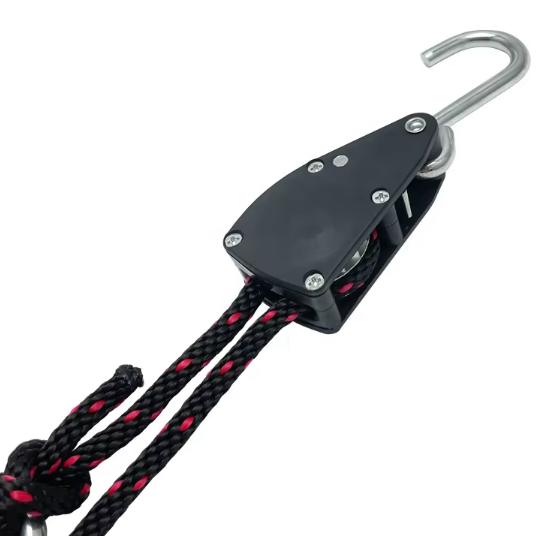
Mechanical Advantage: How Rope Ratchet Delivers Superior Tension Control
The Ratcheting Mechanism and Force Multiplication for Heavy Loads
Rope ratchets really make a difference when it comes to turning just average pulling power into something seriously strong thanks to their mechanical design. Most models come with a lever handle that gives about an 8 to 1 force boost according to Spotts and Shoup's research. So if someone applies around 20 pounds of pressure by hand, they actually get roughly 160 pounds worth of tension on the rope. That kind of grip is totally sufficient for holding down heavy loads weighing several tons without needing expensive hydraulic equipment. What makes these different from regular knots is how they work. Instead of relying on friction alone, there's this pawl and gear mechanism inside that clicks into place every time the handle moves forward. This stops things from slipping backward accidentally. The way the tension builds up gradually rather than all at once helps prevent those jarring surprises where everything suddenly shifts position. Both the stuff being carried and the actual hardware stay safer because of this controlled approach.
Consistent, Repeatable Tension vs. Manual Rope Tightening
Traditional rope methods suffer from inconsistent tension due to variable operator strength and knot slippage—often degrading to just 60% of initial tightness within 30 minutes of vibration. Rope ratchets eliminate this variability:
- Precision control: Each ratchet click advances tension by a fixed increment (e.g., 0.5" per cycle)
- Locked retention: Gear teeth maintain tension within 5% variance even under highway vibration
-
Audible/visual confirmation: Distinct clicks and position markers verify correct tensioning
Operators achieve target tension three times faster than manual methods while reducing musculoskeletal strain by 40% during repeated securing operations.
Heavy-Duty Structural Integrity: WLL, Strap Specifications, and End Fittings
Selecting the Right Rope Ratchet System by Load Class (50mm/75mm, 3"/4")
Proper rope ratchet selection starts with understanding Working Load Limit (WLL)—the maximum safe force during operation, typically 1/3 to 1/5 of breaking strength. Load classes correlate directly with strap width and WLL ratings:
- Light-duty (1"/25mm): Handles <1,000 lbs (e.g., ATVs, compact machinery)
- Medium-duty (2"/50mm): Manages 1,000–5,000 lbs (construction materials, pipes)
- Heavy-duty (3"–4"/75mm–100mm): Secures 5,000+ lbs loads (excavators, steel coils) with WLLs of 3,300–10,000 lbs
| Duty Class | Strap Width | Weight Capacity | Typical Use Cases |
|---|---|---|---|
| Light | 1" (25mm) | <1,000 lbs | ATVs, garden equipment |
| Medium | 2" (50mm) | 1,000–5,000 lbs | Pipes, construction panels |
| Heavy | 3"–4" (75–100mm) | 5,000+ lbs | Industrial transformers |
Mismatching strap width to cargo weight risks slippage or catastrophic failure. For steel coils exceeding 8,000 lbs, 4" straps with double-pawl ratchets maintain tension integrity under shifting forces.
Fatigue-Resistant End Fittings for 10,000+ lbs Dynamic Loads
The end fittings we talk about hooks, shackles and those D-rings they actually face forces during road transport that can be three times what they'd normally carry sitting still. When dealing with loads over 10,000 pounds, the best choice is forged alloy steel parts with those shot peened surfaces because they stop tiny cracks from spreading after all that constant vibrating. Components that have been heat treated keep their working load limits intact even after going through over 50,000 tension cycles. This matters a lot when attaching heavy equipment like bulldozers traveling at highway speeds around 65 mph. Those fittings need to handle massive shock loads up to 20G when brakes slam on suddenly. The reason these special designs matter so much? They stop latches from failing completely. According to recent Department of Transportation data from last year, faulty latches are responsible for nearly 4 out of every 10 cargo accidents on highways.
Real-World Cargo Security: Performance Under Highway Vibration and Load Shift
Rope Ratchet Lock Stability at 65 mph vs. Rope Slack Degradation
The constant jolts from highway travel can create forces over 1.5G when hitting those nasty potholes, and this really takes a toll on regular rope systems that just fall apart too quickly. Manual tightening methods aren't much better either since they tend to lose around 15 to 20% of their tightness after only about 50 miles driven. That's where our rope ratchet comes in handy with its special locking mechanism that actually holds up against road vibrations even at speeds reaching 65 mph. By keeping things secure, we eliminate those dangerous load shifts that cause problems for so many truckers. According to recent transportation safety reports, these shifting loads are responsible for roughly a quarter of all cargo losses out there on the roads.
Key Performance Comparison
| Factor | Manual Rope Tightening | Rope Ratchet System |
|---|---|---|
| Tension Retention | Loses 20% in 50 miles | Maintains 95% after 200 miles |
| Vibration Impact | Fails at >1G vibrations | Stable at 1.5G+ highway forces |
| Load Shift Risk | High (slack accumulation) | Negligible (mechanical lock) |
The ratchet’s dual-gear mechanism withstands harmonic vibrations by distributing kinetic energy laterally—a critical advantage when traversing uneven terrain. This eliminates the need for mid-journey re-tightening and directly supports compliance with FMCSA Securement Rule §393.100.
Rope Ratchet vs. Alternatives: Safety, Compliance, and Operational Efficiency
When it comes to securing loads, rope ratchets beat out manual knots and those old chain binders on several important safety fronts. They stop that annoying gradual loss of tension over time. Industry data shows something pretty impressive too – about 72% fewer incidents happen when loads shift around during transport compared to what we see with traditional methods. What makes these ratchets stand out is their mechanical tension system that actually complies with ISO 27955 standards right out of the box. No need for special training or certification like with those complicated chain systems that require certified personnel to operate properly. Let's talk numbers for a second. Real world tests show these ratchets can get heavy stuff secured roughly 40% quicker than standard lever hoists, plus they take up way less room in storage areas. This means less time wasted preparing cargo and fewer delays during transportation. And here's another plus: the self locking feature keeps everything tight even when trucks hit bumps on highways. At speeds around 65 mph, other systems start showing noticeable slack buildup, but not with rope ratchets.
Table of Contents
- Mechanical Advantage: How Rope Ratchet Delivers Superior Tension Control
- Heavy-Duty Structural Integrity: WLL, Strap Specifications, and End Fittings
- Real-World Cargo Security: Performance Under Highway Vibration and Load Shift
- Rope Ratchet vs. Alternatives: Safety, Compliance, and Operational Efficiency