 EN
EN

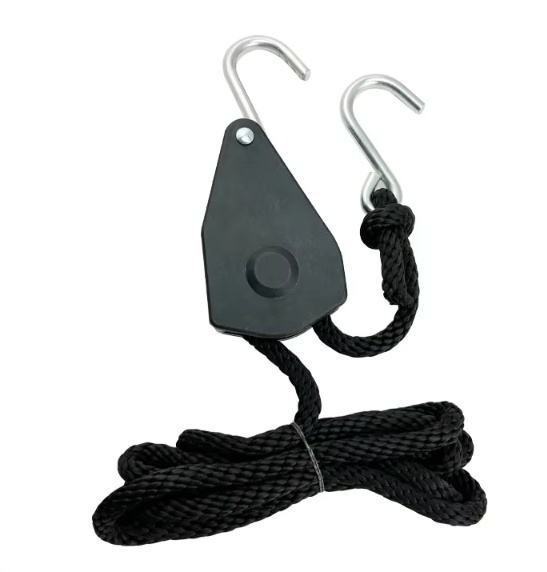
What Is a Rope Ratchet? Core Function and Mechanical Advantage
Rope ratchets serve as mechanical tensioners for securing cargo and various types of equipment when being transported or stored somewhere. What these devices do essentially is apply tension in small steps to either ropes or webbing straps through what's called a spring loaded pawl mechanism. This pawl clicks into place against gear teeth whenever there's weight applied, which locks everything down automatically without any chance of slipping out. Compared to traditional knots, rope ratchets keep their grip steady even when things get shaken around or start moving unexpectedly. Manual tying just doesn't hold up quite the same way over time, especially in situations where constant adjustments would be needed otherwise.
The mechanical advantage arises from its leveraged design: each stroke multiplies user-applied force, enabling a single operator to achieve tension exceeding 1,000 lbs—meeting the ISEA 2023 compliance standard for hand-operated load binders. This force multiplication distributes stress effectively across anchor points while minimizing physical strain.
Key operational benefits include:
- Fail-safe locking: Automatic engagement under load; deliberate release required
- Adjustable tension: Precise control from slack to maximum Working Load Limit (WLL)
- Compact deployment: Space-efficient versus winches or chains
Common Misconceptions
Rope ratchets are not interchangeable with basic tie-down straps. Their geared mechanism delivers superior load stability compared to friction-based systems—especially critical in heavy transport, vertical lifting, or high-vibration environments. Always verify manufacturer specifications for compatibility with rope diameter, material type, and intended application.
Key Applications of Rope Ratchet Systems Across Industries
Cargo Securing in Transportation and Freight
When it comes to keeping freight safe during transport, rope ratchets offer something pretty close to bulletproof security. On roads, these devices stop heavy stuff from moving around when transporting things like bulldozers or excavators on flatbeds. For ships crossing oceans, manufacturers design them with special coatings so saltwater won't eat away at metal parts over time. Air freight companies love how small and light they are too. According to research published last year by the Federal Motor Carrier Safety Administration, almost one third of all truck accidents somehow involve cargo that wasn't properly secured. That's why good tensioning systems matter so much. What makes rope ratchets stand out? They let workers adjust how tight everything gets held down, don't let loose ends form even after long journeys full of bumps and shakes, and have those handy release buttons that make loading and unloading go faster without messing up the setup.
Material Handling and Warehouse Load Control
Most warehouses rely on rope ratchets when it comes to storing items vertically or moving them horizontally across the floor. These tools give workers a real edge since they can lock down heavy pallets (sometimes going well beyond 5,000 pounds) right onto those metal storage racks without needing expensive hydraulic equipment. On production floors, we often see polyester webbing versions being used specifically to safeguard sensitive parts that might get crushed otherwise during transport between stations. A recent survey from the International Warehouse Logistics Association back in 2022 showed something interesting too – companies that switched to these ratchet systems saw around a 40% drop in accidents related to cargo movement. People typically use them for several things actually: keeping stacks stable while forklifts move around, securing big machines when relocating entire sections of a plant, and even setting up quick safety walls where foot traffic gets really dense.
How to Select the Right Rope Ratchet: Load Capacity, Materials, and Compliance
Matching Working Load Limit (WLL) to Operational Demands
When choosing a rope ratchet, the first thing to check is the Working Load Limit or WLL, which basically tells us how much weight it can safely handle during regular operations. To figure out what this number means, manufacturers take the break strength and divide it by something called a safety factor. Most often we see factors around 3 to 1 for everyday jobs, though transportation work usually needs a safer 5 to 1 ratio according to standards set by ASME B30.9. It's really important to pick equipment that matches or exceeds whatever load we expect to deal with, especially when there might be unexpected forces at play like quick stops or ongoing vibrations from machinery. Let's say someone wants to secure a piece of equipment weighing 2000 pounds. Each strap used should have a minimum rating of 2000 lbs WLL. Going beyond these limits creates serious problems. Statistics show that almost 37 percent of all cargo mishaps happen because people didn't properly consider load capacities, as reported by NTSB back in 2023.
Comparing Nylon vs. Polyester Webbing and Zinc-Alloy vs. Forged Steel Components
Webbing material and hardware composition directly impact durability, performance, and safety:
| Component | Nylon | Polyester | Zinc-Alloy | Forged Steel |
|---|---|---|---|---|
| Best For | Dynamic loads (absorbs shock) | Static loads, UV exposure | Light-duty, dry conditions | Heavy-duty, corrosive environments |
| Limitations | Loses ~15% strength when wet | Less elasticity | Prone to cracking under stress | Higher cost |
| WLL Range | Up to 5,000 lbs | Up to 10,000 lbs | ≤ 1,500 lbs | ≤ 3,300 lbs |
Polyester resists UV degradation and chemical exposure better than nylon, which excels in elasticity and energy absorption. For hardware, forged steel withstands five times more fatigue cycles than zinc-alloy (OSHA 2023). Prioritize corrosion-resistant coatings—especially for marine or industrial chemical environments.
Proper Use and Safety Best Practices for Rope Ratchet Systems
Step by Step Tensioning and Release Protocol
- Preparation: Confirm the WLL matches cargo weight and inspect webbing and hardware for cuts, abrasions, corrosion, or deformation.
- Attachment: Thread rope or webbing cleanly through the ratchet slot and secure hooks to certified, structural anchor points.
- Tensioning: Pull the free end taut and engage the ratchet incrementally until cargo is immobile— stop immediately if components deform or emit unusual sounds.
- Locking: Secure excess rope or webbing with knots or secondary clips; conduct a final visual pre-transit check.
- Release: Disengage the lever tab fully to relax tension, then slowly unwind the strap—never force or pry the mechanism.
Common Misuses That Compromise Safety and Compliance
- Over-Tensioning: Exceeding WLL strains components, increasing failure risk by 63% (Industrial Safety Journal 2024).
- Incorrect Anchoring: Hooking to non-structural points reduces stability and violates FMCSA Securement Rule §393.110.
- Material Degradation: Using polyester webbing near strong chemicals or prolonged UV exposure can weaken tensile strength by up to 40%.
- Neglected Release Protocol: Forced manual unlocking damages ratchet gears and voids OSHA-compliant certifications.
| Risk Factor | Consequence | Prevention |
|---|---|---|
| Overloaded WLL | Ratchet mechanism fracture | Use calibrated load cells for verification |
| Abrasive Surface Contact | Webbing fraying | Install edge protectors at contact points |
| Improper Storage | Corrosion of zinc-alloy parts | Store in dry, covered conditions away from moisture |
Adherence to these protocols ensures load integrity and aligns with OSHA 1910.178 standards for powered industrial trucks and associated securing practices.