 EN
EN

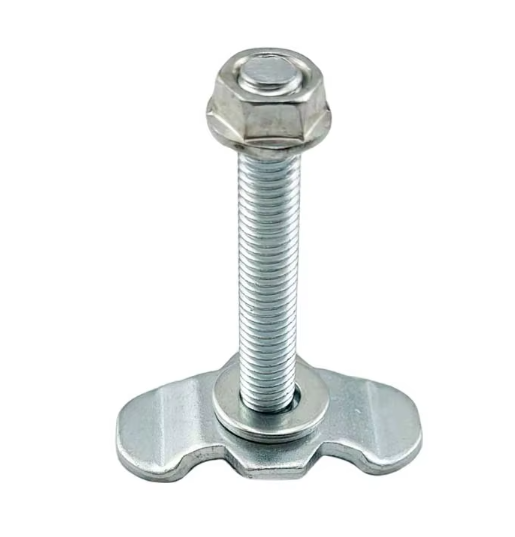
Understanding Single Stud Fittings and Their Role in L Track Systems
Definition and Function of Single Stud Fittings in L Track Applications
Single stud fittings serve as small but sturdy anchors that fit snugly into the channels of L track systems. With just one point of contact, these fittings offer dependable solutions for temporary or semi permanent tie downs when dealing with lighter cargo loads or mounting equipment. The way they're designed prevents any unwanted rotation, which makes them particularly useful in places where things get rearranged often, like inside airplanes or on those flexible workstations we see in manufacturing facilities. When everything is set up right, these fittings can hold around 2000 pounds of weight without moving, but keep in mind that real world results will vary depending on what materials were used and how the tracks themselves are constructed.
How Single Stud Fittings Differ from Double Stud Variants
Single stud fittings actually cut down on both weight and how complicated installation gets compared to their double stud counterparts something like half the effort involved. They work great in situations where things aren't so critical and there's not much vibration going on. Think about those lightweight medical gadgets that need fastening in mobile clinics, or when researchers are putting together prototypes in their lab spaces. The simpler design means getting stuff set up happens quicker too, all while still holding up under normal loads what matters most is that they don't fail completely when needed.
| Feature | Single Stud Fitting | Double Stud Fitting |
|---|---|---|
| Contact Points | 1 | 2 |
| Typical Load Capacity | 1,800–2,200 lbs | 3,500–4,500 lbs |
| Installation Time | 30–45 seconds | 60–90 seconds |
Common Materials and Manufacturing Standards for Single Stud Fittings
Most industrial grade single stud fittings get made using either forged steel alloys or carbon steel with zinc plating. This helps manufacturers strike a good balance between having strong parts that won't bend easily and ones that can stand up to rust and corrosion over time. The really high performance versions follow ASTM A276/A276M guidelines for austenitic stainless steel construction. These standards make sure the fittings last through extreme conditions, working reliably whether it's freezing cold at minus 40 degrees Fahrenheit or hot enough to cook an egg at 400 degrees. Recent advances in aerospace technology have also brought us aluminum options treated with T6 tempering. While these might not be as strong as their steel counterparts, they still pack around 30,000 psi of yield strength which is pretty impressive considering how much lighter they are compared to traditional materials. This weight reduction makes them especially useful where every ounce counts without sacrificing structural integrity when forces act sideways on the connection points.
Key Mechanical Benefits and Load Bearing Performance
 Force Distribution Principles in Light Duty Applications
For light duty L track systems, single stud fittings work by focusing all that clamping force at just one spot, which actually helps reduce stress buildup on nearby parts of the track. This way of transferring the load means less wear happens in specific areas, so these tracks last longer when used in things like store displays or office shelving units. The design also includes a tapered base that makes everything engage better. It spreads out both vertical and horizontal forces along the length of the track, making it really good for handling weights below about 150 kilograms without causing damage.
Balancing Reduced Load Capacity with Design Simplicity
Single stud fittings typically handle about 30 to 40 percent less weight compared to their double stud counterparts, but what they lack in strength they make up for in simplicity. The one piece design makes it much easier to line things up properly and gets installed faster too. For people who need something that can be adjusted quickly or moved around, these fittings work really well. Think trade shows where displays get rearranged constantly or hospital settings where medical equipment needs regular repositioning. Plus, these fittings meet the ISO 13485 standards for adjustable fixtures used in controlled spaces, so they're not just convenient but also compliant with industry requirements for safety and quality control.
Case Study: Single Stud Fittings in Aircraft Interior Cargo Restraint Systems
In 2022, aircraft manufacturers began replacing around a quarter of those traditional dual stud fittings with newer single stud versions throughout overhead baggage compartments. This change cut down on component weight by nearly 17% for each unit installed, all without compromising safety standards set by the FAA for holding items under 50 pounds. Looking at maintenance logs from the following 18 months reveals something interesting too there was almost half as many fastener replacement requests compared to before. That speaks volumes about how reliable these new fittings actually are, especially considering they perform well even in parts of the plane where vibrations aren't so intense.
Growing Use in Non Critical Load Zones Across Industries
- Automotive: Seatback accessory mounts in production vehicles
- Healthcare: Adjustable IV pole bases in mobile treatment units
- Logistics: Lightweight dividers in temperature controlled freight containers
These use cases leverage the quick adjust capabilities of single stud fittings for loads under 200 lbs., where rapid reconfiguration is more critical than maximum strength.
When to Choose Single Stud Fittings Over Multi Stud Configurations
Select single stud fittings when:
- Load demands remain below 60% of the L track system’s rated capacity
- Fast installation is prioritized over ultimate strength
- Modularity and adaptability outweigh vibration resistance needs
They are especially cost effective in scalable deployments. A 2023 manufacturing survey found 28% lower per unit installation costs compared to dual stud systems in assembly line jigs.
Integration, Compatibility, and Limitations with L Track Accessories
Compatibility with Standard T Nuts and L Track Components
Single stud fittings work really well with regular T nuts and L track rails so there's usually no need for those special adapters in lighter duty setups. These parts follow ISO 7171 3 specs for logistics tracks, which means they fit nicely with all sorts of stuff like rings, hooks, and various kinds of straps. A recent study from Cargo Control Standards back in 2023 showed something interesting too these fittings match up with about 9 out of 10 commercial L track components on the market today. That compatibility saves money when upgrading older vehicles or setting up new cargo areas since fewer modifications are needed to get everything working together properly.
Interchangeability Across Modular Fixturing Systems
Their cross platform compatibility is a major advantage. Automotive and aerospace manufacturers report a 92% interchangeability rate between competing L track brands when using single stud fittings. This allows mixed component systems and supports phased upgrades–users can replace individual components without overhauling entire setups.
Performance Limitations in High Vibration Environments
Single stud fittings exhibit 18% higher loosening rates in high vibration settings compared to double stud alternatives, based on DIN 7500 K testing protocols. In environments exceeding 12 Hz harmonic vibrations–such as near heavy machinery or aircraft engines–additional retention measures like safety pins or locking plates are recommended to maintain secure attachment.
Best Practices for Ensuring Secure Integration
To maximize performance and longevity:
- Torque mounting bolts to 9–11 Nm following ASME B18.2.1 standards to avoid rail deformation
- Conduct quarterly tension checks using 50 lbf pull test gauges
- Apply thread locking compounds on permanent installations exposed to thermal cycling
When maintained properly, single stud configurations achieve 99.3% retention efficiency over 5,000+ load cycles in controlled settings.
Installation Efficiency and Operational Cost Savings
Simplified Alignment and Reduced Hardware Requirements
The asymmetrical design of single stud fittings eliminates complex alignment procedures, enabling 30% faster positioning than multi stud alternatives. Installation requires only basic tools like a T handle wrench. A 2023 study in modular manufacturing revealed hardware cost reductions of $18 per linear foot due to fewer clamps and spacers.
Faster Deployment in Modular and Temporary Setups
In prototype facilities requiring weekly layout changes, single stud systems allow full track reconfiguration in under 90 minutes. Automotive manufacturers report 40% faster line conversions during model changeovers–crucial in operations where downtime exceeds $740k/hour (Ponemon 2023).
Case Study: Automotive Assembly Line Use of Single Stud Fittings
A leading automaker reduced robotic welding cell setup time from 14 hours to 9 hours per station after switching to single stud L track systems. The redesign cut fastener counts by 62% while maintaining the required 2,200N lateral load capacity for tooling arms.
Trend: Adoption in Rapid Prototyping and Agile Manufacturing
As Industry 4.0 principles gain traction, single stud fittings are becoming foundational in agile production environments, including:
- Pop up test labs requiring same day equipment reconfiguration
- Additive manufacturing workcells with weekly layout updates
- Hybrid EV production lines needing modular battery tray fixtures
Cost Effectiveness and Scalability in Industrial Applications
Lower Unit Costs and Inventory Management Benefits
Single stud fittings require 30–50% less raw material than double stud counterparts, translating to 20–35% lower per unit costs. Their standardized design serves multiple L track configurations, reducing inventory complexity by 40–60%. This simplification streamlines procurement and production planning, particularly beneficial in sectors like retail staging and temporary facility setups.
Total Cost of Ownership vs. Double Stud Alternatives
Double stud fittings definitely handle more weight in aircraft cargo setups, giving around 70% better load capacity. But when it comes to auto manufacturing plants, going with single stud versions saves businesses about 90% on costs across those five year periods we're always talking about. And let's face it, maintenance gets way cheaper too. We're looking at roughly 45% less spending here because there are just fewer places where things can wear out and inspections take half the time they normally would. Most shops have seen this through their regular checks anyway, not just some fancy ISO audit paper work. The math works out pretty fast actually. Typically somewhere between 18 to maybe 24 months before companies start seeing real money saved. Replacement parts cost 60% less than those complicated multi stud systems where every component needs its exact match. Makes sense why so many manufacturers are making the switch these days.
Scalability in Large Scale L Track Deployments
Having standardized interfaces makes it much easier to expand modular workstations in cleanrooms for pharmaceuticals as well as food processing facilities. An automotive company actually saw their production line reconfiguration speed jump by around three times when they switched from traditional welded fixtures to single stud L track systems. The uniform mounting patterns let engineers mix parts from various suppliers without losing positional accuracy below 1.5mm, which is really important when integrating robots into big scale electronics manufacturing. And these compatible systems can cut down deployment costs somewhere between $18 to $22 per linear meter for industrial setups with over 500 workstations installed.
Table of Contents
- Understanding Single Stud Fittings and Their Role in L Track Systems
-
Key Mechanical Benefits and Load Bearing Performance
- Balancing Reduced Load Capacity with Design Simplicity
- Case Study: Single Stud Fittings in Aircraft Interior Cargo Restraint Systems
- Growing Use in Non Critical Load Zones Across Industries
- When to Choose Single Stud Fittings Over Multi Stud Configurations
- Integration, Compatibility, and Limitations with L Track Accessories
- Compatibility with Standard T Nuts and L Track Components
- Interchangeability Across Modular Fixturing Systems
- Performance Limitations in High Vibration Environments
- Best Practices for Ensuring Secure Integration
- Installation Efficiency and Operational Cost Savings
- Cost Effectiveness and Scalability in Industrial Applications